Showing posts with label shade. Show all posts

Thursday, July 28, 2011

Shading your plants can increase vegetable production and quality

In those parts of the world where sun light is intense and air temperature is hot providing shade cover for your vegetables can increase yield and quality.


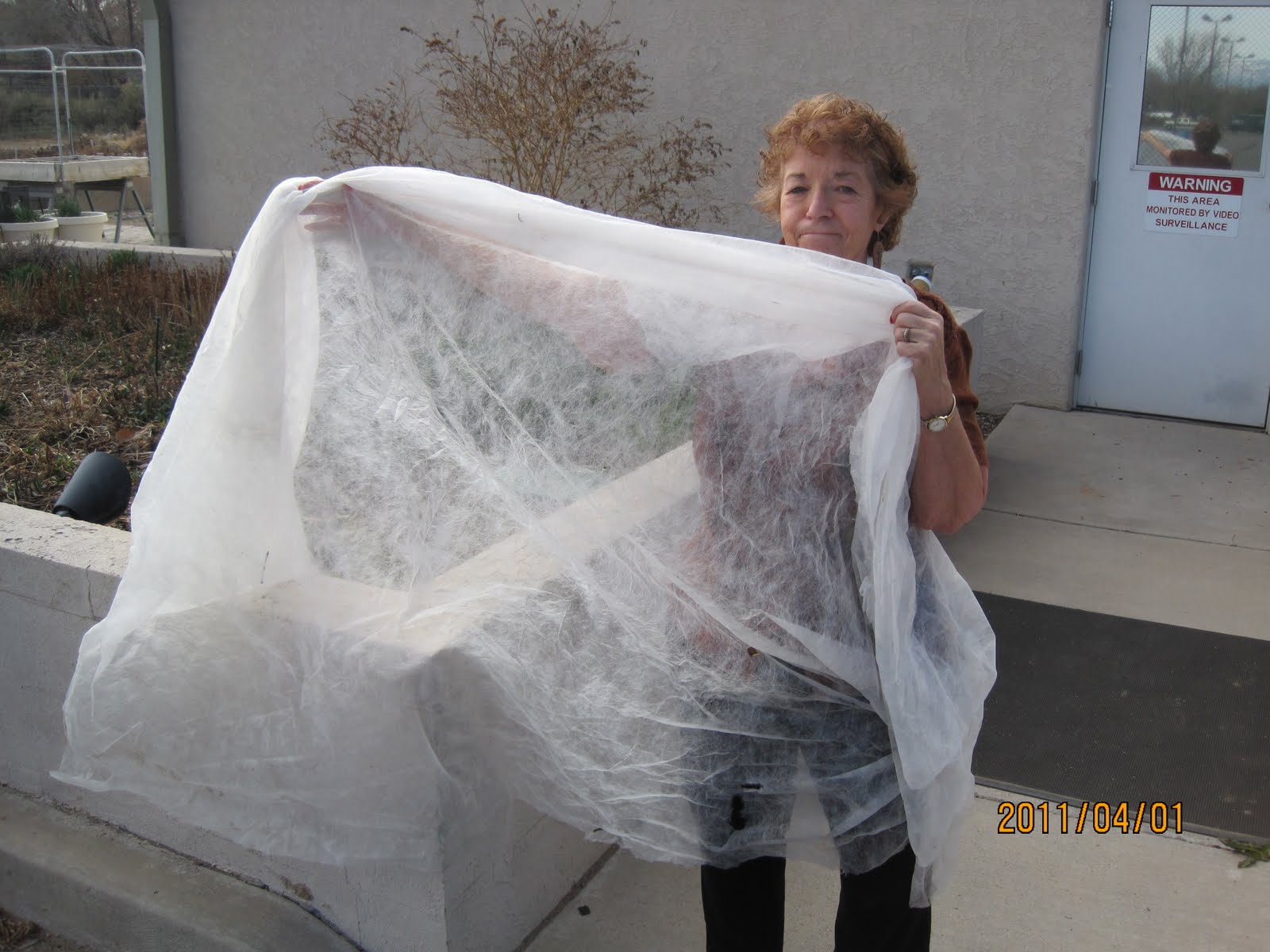
Kay Wheeler holds up a piece of floating row cover (insect barrier)
that can be used to shade plants.

A number of vegetables to include tomatoes, peppers, eggplant and okra drop flower buds and young fruit when the plant’s temperature exceeds 32 degrees C. (90 degrees F.). These plants also may abort flower buds and fruit when evening air temperatures drop below 10 degrees C. (50 degrees F.). Shading the plants helps correct these problems.

Even when air temperature exceeds 32 degrees C. (90 degrees F.) shading the plants helps keep the plant below this critical temperature. When shade is provided it also helps retain night temperatures above the critical 10 degrees C. (50 degrees Fahrenheit).

Shade cloth, sheeting or even brush stuck into the ground on the south and west sides of these plants can be used. Shade cloth, sheeting or other fabrics should be suspended above the plants. This will permit insects to reach the blossoms for pollination. Brush pushed into the ground on the south and west sides of these plants will also provide the shade necessary to increase production. Shading also helps prevent sun burn on tomatoes, egg plant, okra and other vegetables improving the length of time they can be kept in storage.

Pepper fruit damaged by sunburn.


Wednesday, June 30, 2010

Fertilizer needed for your sweet corn, squash, pumpkins, cucumbers and melons


Many gardens already have sweet corn with at least 8 leaves. If your sweet corn has this many leaves it needs to be fertilized. For every 250 feet of row, scatter ½ pound of Nitrogen along the side of the row, carefully rake it in and water to move the nitrogen into the root zone.

The sweet corn in the photo is yellow due to a lack of nitrogen fertilizer. Applying nitrogen will help correct that problem.

If your cucurbits (squash, pumpkin, cucumber & melon plants) are vining as is seen in the photo, you should fertilize with 0.1 pounds of nitrogen per 250 foot of row in the same manner as I’ve described with corn.

One-tenth of a pound of Nitrogen and even one-half pound of nitrogen seems like an awfully small amount and it is but these small amounts are necessary to keep these plants growing properly so they will produce the quantity and quality of vegetable you expect to harvest.

One-tenth of a pound of nitrogen does not mean one-tenth of a pound of fertilizer. No fertilizer is 100% nitrogen. Fertilizers, whether synthetically manufactured or organic, contain varying levels of nitrogen. If you use ammonium sulfate as your nitrogen source, it contains ~20% N. Therefore 5 pounds of ammonium sulfate equals 1 pound of nitrogen. If you use Corn Gluten (~10% N) as your nitrogen source it will take 10 pounds of corn gluten for every pound of Nitrogen.

Depending on what you are using for fertilizer, calculate the amount of fertilizer needed based on its nitrogen content and fertilize. For more specifics on how much Nitrogen your vegetables need, check out the fact sheets at http://www.coopext.colostate.edu/TRA/PLANTS/Vegetable_Gardening_Nitrogen_Recommendations.pdf and http://www.coopext.colostate.edu/TRA/PLANTS/Organic_Fertilizers.pdf. These fact sheets provide more information on fertilizing your vegetable garden and the organic products available.
The above photos also show a drip irrigation system used to water these vegetables and shades on the west and south sides of the cucurbits. Both of these methods of production increase yield and the quality of your vegetables.

Wednesday, June 9, 2010

Protecting your vegetables and flowers from drying winds and the hot sun

The heat and winds we have been experiencing has caused many of our newly planted vegetables and flowers to wilt. Due to the lack of roots on these new plants wilt no matter how much water you provide the plants . When our vegetables and flowers are stressed in this manner early in the season they will not produce the fruit or flowers they should for the remainder of the season. Providing shade to prevent this stress is strongly recommended.
Just about anything that cuts the wind and shades the plant will work. Old wood shingles pushed into the soil on the south and west side but several inches away from the plant works well. If you have constructed a trellis for your plants consider draping cheese cloth or a light shade cloth over the trellis and plants. Even old sheets can be used to cut the wind and cast a shadow on the plant.


Several weeks ago my grandson Soren set a cabbage plant out in his garden. As soon as the days got hot the plant wilted even though the plant was properly watered. The wilting was corrected when it was covered with a thin layer of spun-bonded polyester. This material allows sufficient light to get through to the plant while reducing the plant’s temperature. The material used is commonly sold as an insect barrier so it also solved the problems of caterpillars. If cabbage butterflies can’t land on the plant they can’t lay eggs on the plant.


In addition to the polyester fabric, I like to use the small shades available from the Colorado State Forest Service (CSFS). These shades are designed to protect tree and shrub seedlings but work just as well on other plants. I place these on the south and west side of tomatoes, peppers and even flowers. I use three (or even more) of these shades around each new transplant. Keep them far enough away from the plants so they don’t trap heat but still provide shade. I’m not sure the CSFS has any available at this time but if you are interested you might want to give them a call at their Grand Junction office at 970 248-7325. You can always make your own from wire and shade fabric.
Some of the gardeners at the Grand Junction Community Garden at the Library (5th and Chipeta) are cutting brush and pushing this into the soil to shade their plants.
Another technique that helps reduces stress on these new plants is to cover the soil around the plants with an inch or two of a bark or wood chip mulch. Do this early in the morning when the soil is cool. A layer of mulch when soil is cool will help keep the soil cool. If you apply mulch later in the day when the soil is warm you will trap in the heat of the soil. Roots are more capable of absorbing moisture and nutrients when the soil is cool. When the soil gets too hot, roots shut down and will no longer absorb water or nutrients even when the supply is plentiful.
Keep the mulch an inch or two away from the stem of the plant. You do not want to create an environment where disease and insect pests can attach the stem.
Avoid the tendency to water the plants whenever they start to wilt. Check the soil and if it seems there is sufficient soil moisture, the problem with water uptake may be due to a lack of adequate shade and a soil that is too warm for the plant’s roots. Give shading a chance.